

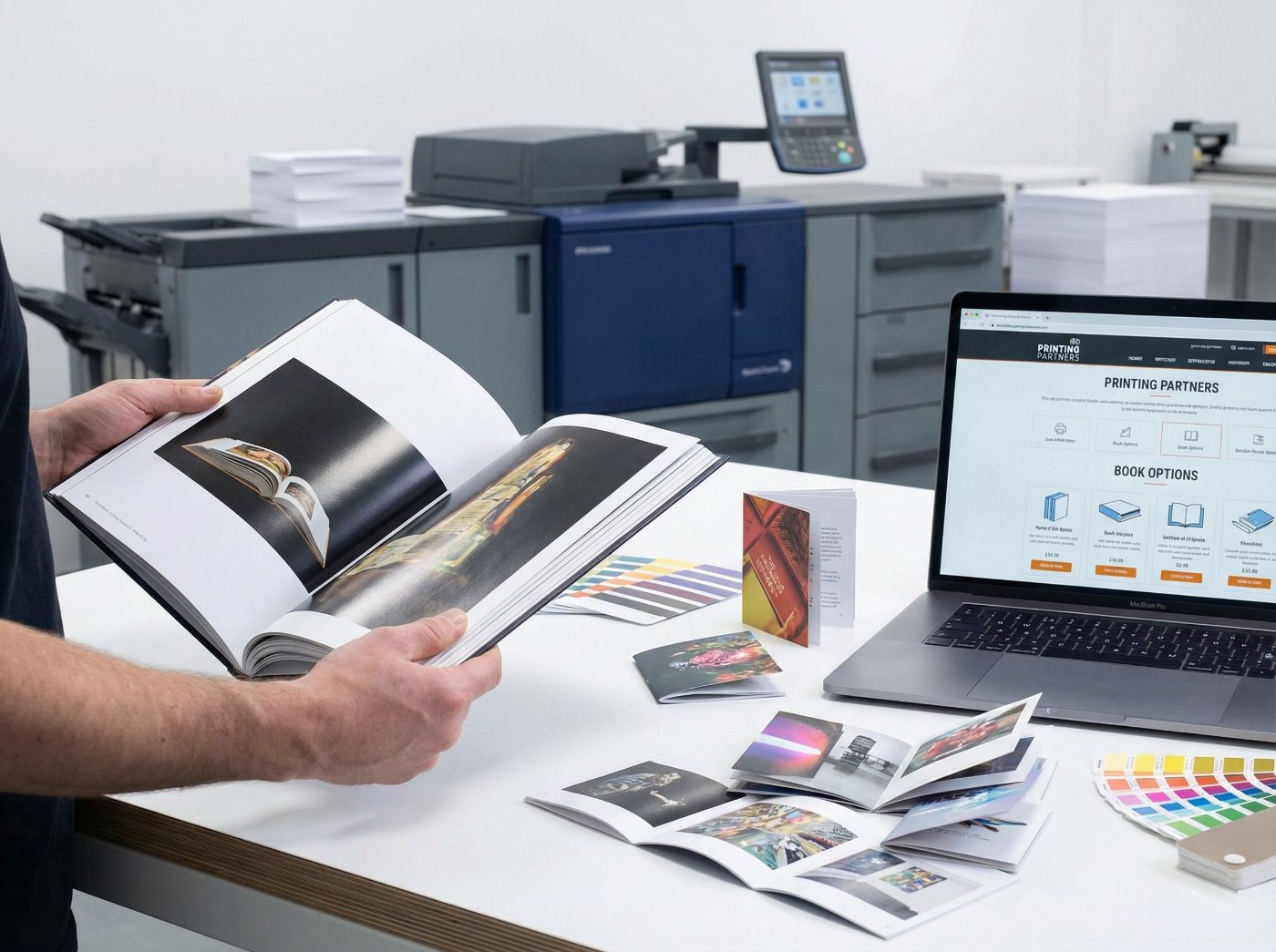
Introduction: Why the Printer is Your Most Important Collaborator
You’ve spent months—perhaps years—perfecting every brushstroke, edit, and layout. But in the world of physical media, the quality of your work is only as good as the paper it’s printed on and the machine that applies the ink.
Choosing the best printing service for your art book project is not merely a logistical step; it is a creative partnership. A generic office printer or a budget “business flyer” shop won’t understand the nuances of shadow detail or the tactile importance of a Smyth-sewn spine. This guide will walk you through the five pillars of choosing a printing partner that will elevate your work from a digital file to a museum-quality object.
1. The Color Expertise: Beyond “Good Enough”
Most commercial printers are optimized for “speed and legibility.” They want text to be sharp and colors to be “pleasing.” However, art books require chromatic fidelity.
When vetting a printer, ask about their color management systems. Professional art book printers use G7 Master Certification or similar standards to ensure that what you see on a calibrated monitor matches the physical output.
- Closed-Loop Systems: These systems monitor ink density in real-time. If the press starts to drift toward a magenta hue during a 1,000-copy run, the system automatically corrects it.
- The “Grey Balance” Test: Ask for a sample of a book with black-and-white photography. If the shadows look green or purple, their grey balance is off—a major red flag for any art project.
The Proofing Process
A top-tier service will never ask you to go straight to press from a PDF. Look for a printer that offers:
- Digital Contract Proofs: High-resolution proofs that simulate the final color.
- Physical Wet Proofs: For high-end offset projects, this involves printing a few pages on the actual press and paper stock you’ve chosen. It’s the only way to be 100% sure of the result.
2. Binding Options: Durability Meets Aesthetics
The binding is the architecture of your book. If the binding is poor, the book won’t lay flat, the spine will crack, and pages will eventually fall out.
| Binding Type | Best For… | Pro Tip |
| Smyth Sewn | High-end art books & monographs | The gold standard. Allows for “lay-flat” viewing and extreme durability. |
| Perfect Bound | Softcover catalogs & lookbooks | Cost-effective and clean, but the book won’t stay open on its own. |
| Case Bound | Coffee table books | Provides a rigid hardcover. Can be wrapped in printed paper, cloth, or leather. |
| Lay-Flat (Adhesive) | Seamless spreads | Ideal for photography where images span across the gutter without loss. |
At ArtBook Printing, we generally recommend Smyth Sewn for any project intended to last a lifetime. When a book is sewn, the signatures are stitched together, providing a flexibility that glue-only methods simply cannot match.
3. Material Sourcing: The Tactile Library
A printing service is only as good as its paper library. When you talk to a potential printer, they shouldn’t just offer “glossy or matte.” They should speak the language of texture and weight.
- FSC-Certification: In today’s market, sustainability is a requirement. Ensure your printer sources paper from responsibly managed forests.
- The Hand-Feel: Does the printer offer specialty stocks from mills like Mohawk, Arjowiggins, or Munken? The tactile sensation of turning a page is 50% of the art book experience.
- Opacity Matters: An inexperienced printer might suggest a thin paper to save money, but in an art book, you need high opacity (minimal “show-through”) so that the image on page 10 doesn’t ghost through to page 11.
4. Special Effects and Finishing (The “Wow” Factor)
The best printing services offer in-house finishing. Outsourcing finishing to another shop can lead to delays and quality control issues. Look for a partner capable of:
- Foil Stamping: Adding metallic or pigment foils to the cover for a premium feel.
- Spot UV/Varnish: Applying a glossy coating to specific images while the rest of the page remains matte.
- Debossing/Embossing: Pressing a design into the cover material to create a 3D texture.
- Gilded Edges: Adding gold, silver, or matte color to the edges of the page block.
5. Communication: The Human Element
In the era of automated “upload-and-pay” websites, human expertise is becoming a luxury. For a complex art book, you need a dedicated project manager.
- The Pre-Flight Review: Does the printer have a human prepress department that checks your files for bleed errors, low-resolution images, or transparency issues?
- Consultative Selling: A great firm will tell you no. If you choose a paper/binding combination that won’t work, they should warn you before the press starts running.
- Global Shipping Knowledge: Art books are heavy and expensive to move. The best service providers have established relationships with freight forwarders to ensure your books arrive without crushed corners.
6. Value vs. Price: The Hidden Costs of Cheap
It is tempting to choose the lowest quote. However, in art book printing, “cheap” often comes with hidden costs:
- High Waste: Lower-quality printers may have a higher spoilage rate.
- Short Lifespan: Poor glue and acidic paper will cause a book to yellow and fall apart within 5 years.
- The Reputation Cost: If you are selling your book for $50–$100, your customers expect a professional object. A budget feel can damage your brand as an artist.
Conclusion: Why ArtBook Printing?
At ArtBook Printing, we don’t just print books; we manufacture legacies. We understand that every project is unique, which is why we prioritize high-touch communication, premium material sourcing, and the latest in color-control technology.
Choosing a printing service is about trust. You are trusting someone with your creative vision. Make sure they have the portfolio, the technical specs, and the passion to do it justice.