

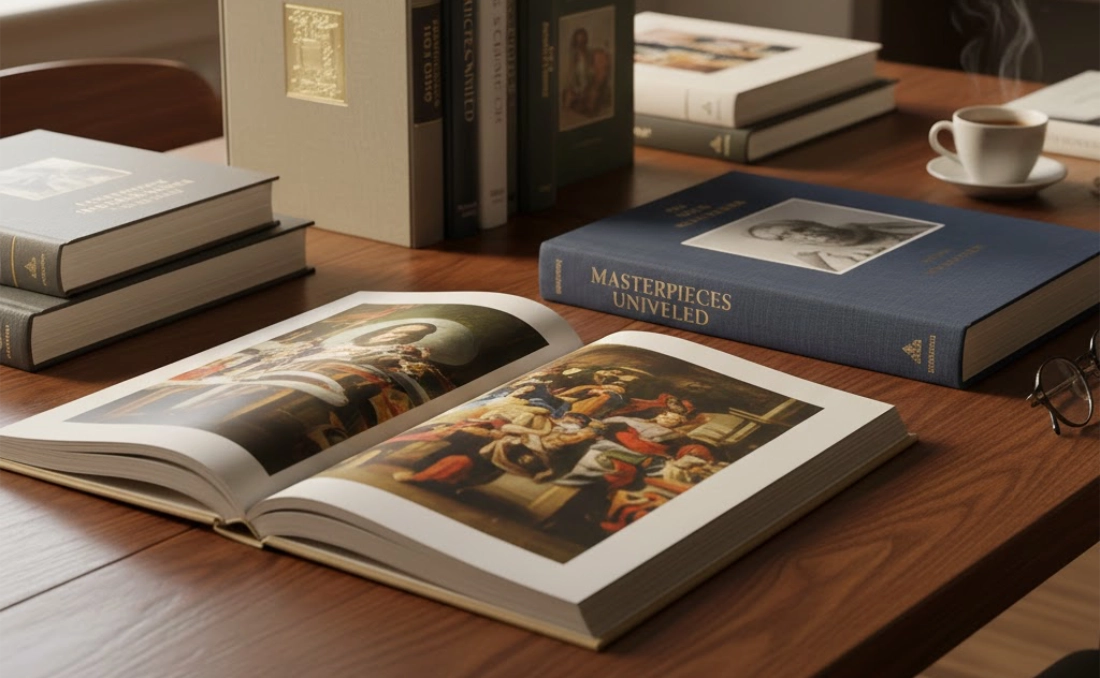
Producing a high-quality art book involves navigating a complex maze of technical, creative, financial, and logistical challenges. Based on extensive industry research and practitioner experiences, the following ten pain points represent the most critical obstacles that creators face throughout the entire production lifecycle.
1. Color Management and Accurate Reproduction
Color accuracy stands as perhaps the most technically demanding aspect of art book production. The fundamental challenge lies in translating digital artwork—typically created in RGB (red, green, blue) color space with 16.7 million possible colors—into CMYK (cyan, magenta, yellow, black) for print, which can only reproduce approximately 16,000 colors. This conversion frequently produces unexpected color shifts, particularly in blues, which lose vibrancy when converted from RGB’s additive color model to CMYK’s subtractive system.
The proofing stage becomes critical but complex. Digital proofs viewed on uncalibrated monitors can appear dramatically different from the final printed product. Physical hard copy proofs, while more accurate, add significant cost—yet they remain essential for color-critical projects. Many printers also tend to slightly darken colors during production, necessitating careful calibration and multiple proof rounds. The paper selection further complicates matters, as different paper stocks (brightness, opacity, coating) directly impact how colors appear in the final product.
Artists must also understand color profiles—the difference between U.S. Web Coated (SWOP) v2, Uncoated FOGRA29, and other standards can significantly affect output. Soft proofing tools in Adobe Photoshop help preview CMYK limitations, but viewing “gamut warnings” (colors that fall outside printable range) requires technical expertise many artists lack.
File Preparation and Technical Requirements
File preparation errors constitute a major source of production delays and quality problems. The industry standard requires images at 300 DPI (dots per inch) at final print size, yet many creators submit lower-resolution files that appear acceptable on screen but print poorly. A common mistake involves manually changing an image’s DPI setting without actually increasing resolution—this “upsampling” simply makes pixels larger without adding detail.
Bleed requirements trip up many first-time publishers. Standard practice requires artwork to extend 0.125 inches (3.2mm) beyond the trim size on all sides. Without proper bleed, any slight shift during cutting leaves white gaps at page edges. Conversely, important content placed too close to trim edges risks being cut off entirely.
Color mode errors prove costly. Files submitted in RGB rather than CMYK force last-minute conversions that can dramatically alter appearance. Font issues create additional problems—un-outlined or un-embedded fonts may be substituted with default alternatives by the printer, destroying carefully chosen typography. Missing linked images can cause entire visual elements to disappear when files are opened on different systems.
3. Trim Size and Layout Decisions
Trim size decisions must be finalized before artwork creation begins, yet many creators overlook this timing. Print-on-demand services like Amazon KDP and IngramSpark support only specific trim sizes. Creating illustrations for an unsupported size necessitates expensive resizing or complete re-creation of artwork.
Standard art book sizes include 8.5″ x 8.5″, 8.5″ x 11″, and larger coffee-table formats like 11″ x 8.5″ or 12″ x 9″. The choice affects more than aesthetics—larger trim sizes consume more paper, increasing per-unit costs substantially. Landscape versus portrait orientation also impacts binding methods, reader experience, and distribution channel acceptance.
Page count and trim size interact with binding capabilities. Perfect binding works well for page counts between 28-250 pages, while case binding (hardcover) suits thicker books. Margins require careful attention—gutters (inner margins) need extra width for thicker books to prevent text disappearing into the spine, typically 0.75-0.9 inches for books over 400 pages.
4. Printing Cost Management and Budget Overruns
Art book printing costs wildly exceed expectations for many first-time publishers. The total investment for self-publishing a quality art book frequently exceeds $15,000-$25,000 (and up) when accounting for editing, professional photography, cover and interior design, proofing rounds, offset printing minimums, warehousing, marketing materials, launch expenses, and professional website development. Unexpected costs accumulate throughout production—additional proof rounds, file correction fees, rush charges, and upgraded shipping compound rapidly.
Offset printing requires minimum orders (typically 500-1,000 copies for art books) with upfront payment covering the entire run. While per-unit costs decrease dramatically at volume, this demands substantial capital investment before a single sale occurs. Print-on-demand (POD) eliminates upfront inventory costs but charges $15-$20+ per copy even for simple books, making profitable retail pricing difficult.
Retailers compound the challenge—bookstores take 40% of list price, while Amazon takes 55%. Recouping production investment requires years of sustained sales for most self-published art books.
5. Paper Selection and Material Compatibility
Paper choice profoundly impacts color reproduction, durability, reader experience, and cost. Art books typically require coated paper (gloss or matte finish) to accurately reproduce photographs and artwork with proper color saturation, contrast, and detail. Paper weight affects perceived quality—heavier stocks (150-200 GSM for text weight, 300 GSM for cover) feel more premium but increase printing costs and binding challenges.
Texture presents a trade-off: smooth papers preserve fine detail and prevent reflections under glass, while textured papers add depth and authentic feel but can soften intricate details. The paper’s color temperature (bright white versus natural/warm white) significantly alters how printed colors appear.
A critical compatibility issue: traditional fine art papers often don’t work well for bound books, as they lack the flexibility needed at the gutter. Offset lithographic printing on standard book papers provides more limited color gamut than fine art giclée printing, yet it remains the standard for commercially bound art books.
6. Working with Illustrators and Managing Rights
Illustrator relationships present both creative and legal challenges. Communication breakdowns rank among the most commonly cited problems—artists fail to meet deadlines without notification, disappear mid-project, or deliver work that doesn’t match agreed specifications. Clear contracts with defined timelines, revision allowances, and deliverable specifications help prevent disputes.
Rights negotiations often prove incomplete. Simply hiring an illustrator doesn’t automatically grant copyright ownership of the artwork—specific usage rights must be negotiated and documented. Authors frequently discover after artwork completion that they possess rights only for print publication, lacking permissions for marketing materials, merchandise, cover variants, or digital editions. Securing additional rights post-production becomes prohibitively expensive.
Illustration contracts should explicitly address: copyright assignment or license terms, territorial distribution rights, print run limitations, digital rights, merchandising rights, derivative work permissions, attribution requirements, and buyout options. Many self-publishers skip these details, leading to costly conflicts or restricted usage of artwork they believed they fully owned.
7. Production Timeline Delays and Interdependent Processes
Book production timelines routinely extend far beyond initial estimates. Standard text-driven books require approximately three months from editing start to publication, assuming timely approvals. Illustrated books, particularly art books with color-critical requirements, need substantially longer—six to as much as nine months represents realistic timeframes for full-service production.
The process involves numerous interdependent stages where delays cascade. Manuscript editing (1-3 months) must complete before layout begins. Cover and interior design (1-2 months) require finalized text. Proofing and approval cycles add two to four weeks minimum. Offset printing production takes 4-8 weeks, not including shipping time from overseas printers.
Each stage awaits approval from the previous stage. Late text changes ripple through the entire production schedule, potentially requiring new spine calculations, reformatted layouts, and additional proof rounds. Traditional publishers typically work 18-24 months ahead of publication dates to accommodate this complexity and build marketing momentum.
Communication gaps amplify delays—authors sending feedback across multiple channels, vague deadlines, questions sitting unanswered in email, and specification decisions deferred until production stages create bottlenecks.
8. Quality Control and Manufacturing Defects
Every page presents an opportunity for error. Professional books pass through developmental editing, copyediting, and proofreading, yet typos still slip through to final publication. Formatting errors often emerge during late production stages—paragraph breaks shift, images move, or layout specifications change when files convert between software versions.
Common printing defects include color shift (printed colors not matching approved proofs), misregistration (color plates misaligned, creating blurry images or text), blurry images (caused by low resolution or incorrect screening), loose pages or spine cracking (binding defects), and uneven trimming. Books can arrive with visible dirt, stray glue, or clipped artwork at page edges.
Warping affects hardcover books when cover materials and endpapers exert uneven pull on boards during drying. Poor glue application creates air bubbles in covers or loose pages. Insufficient drying time causes warping after books are removed from presses.
The proofing stage serves as the final checkpoint, but many authors merely glance at proofs rather than scrutinizing every detail. Problems visible in approved proofs become the author’s responsibility—printers won’t reprint or credit books for issues the author accepted during proofing. Issues not visible in proofs but appearing in final books become the printer’s responsibility, creating negotiation opportunities.
9. Distribution and Fulfillment Challenges
Distribution represents one of the most misunderstood aspects of book publishing. Print-on-demand (POD) through Amazon KDP and IngramSark provides automatic digital distribution—books appear in online catalogs and print upon order. This eliminates warehousing concerns and upfront inventory investment.
However, offset printing requires separate fulfillment arrangements. Printing 1,000 books that arrive on a pallet at your home creates immediate problems: where to store them, how to ship individual orders, how to get them into retailers’ hands. Working directly with Ingram or Amazon as a single-title self-publisher proves nearly impossible without using their POD services.
Third-party fulfillment services warehouse inventory and ship individual orders, but they charge storage fees and per-order pick-and-pack fees. Amazon’s FBA (Fulfilled By Amazon) program offers distribution leverage but requires complex setup and ongoing fees.
Physical bookstore placement remains extremely difficult for self-published art books. Bookstores generally won’t stock POD titles, and they’re reluctant to order from unfamiliar small publishers. Even with distribution, bookstores can return unsold inventory, creating financial risk. Libraries typically require professional reviews before purchasing—reviews self-published books rarely receive.
The reality for most self-published art books: distribution means primarily direct-to-consumer sales through the author’s website, supplemented by Amazon and occasional special events.
10. Shipping, Packaging, and Damage Prevention
Books occasionally arrive damaged due to inadequate packaging. Common shipping damage includes dinged corners, bent covers, spine damage, torn dust jackets, and water damage from exposure during transit. Art books face particular vulnerability—their larger sizes, heavier weights, and premium materials make them more susceptible to damage.
Proper packaging requires specific techniques: wrapping books in moisture-proof cling wrap sealed with tape, using appropriately sized boxes with minimal internal movement, adding corner protection, providing sufficient cushioning material, and using boxes with adequate crush-test ratings. Bubble mailers prove insufficient for hardcover books.
Shipping insurance presents complications. Carriers frequently deny damage claims citing “insufficient packaging”—if packaging doesn’t meet their exact specifications (specific bubble wrap thickness, box strength ratings, cushioning measurements), they argue damage resulted from packing rather than handling. Documenting packaging thoroughly and following carrier guidelines precisely becomes essential for successful claims.
Dust jackets create additional vulnerability—they account for approximately 70% of book damage, and once ripped, bent, or dirty, books become unsellable at full price. Some publishers eliminate dust jackets entirely, printing cover designs directly on cases to prevent this damage vector.
Strategic Considerations
These ten pain points interconnect throughout the production process. Color management decisions affect file preparation requirements. Trim size choices impact paper selection and printing costs. Production timelines depend on quality control thoroughness. Distribution strategies influence whether offset or POD printing makes economic sense.
Successful art book creators address these challenges through careful planning, adequate budgeting, clear contracts, technical education, strategic partnerships with experienced service providers, and realistic timeline expectations. The journey from artistic conception to finished, shipped product remains complex and expensive, but understanding these common pain points enables more informed decision-making and better outcomes.
For self-publishers entering this space, the fundamental insight remains: art book production demands substantially more time, money, and expertise than initially apparent. Building contingency into budgets and timelines, and emotional reserves (ie: accepting imperfection) helps navigate the inevitable challenges that arise between vision and reality.
Ready to avoid costly reprints, color mismatches, and production delays? Discover why artists, galleries, and museums worldwide trust artbookprinting.com for flawless art book printing. Start your project with a free quote today!