

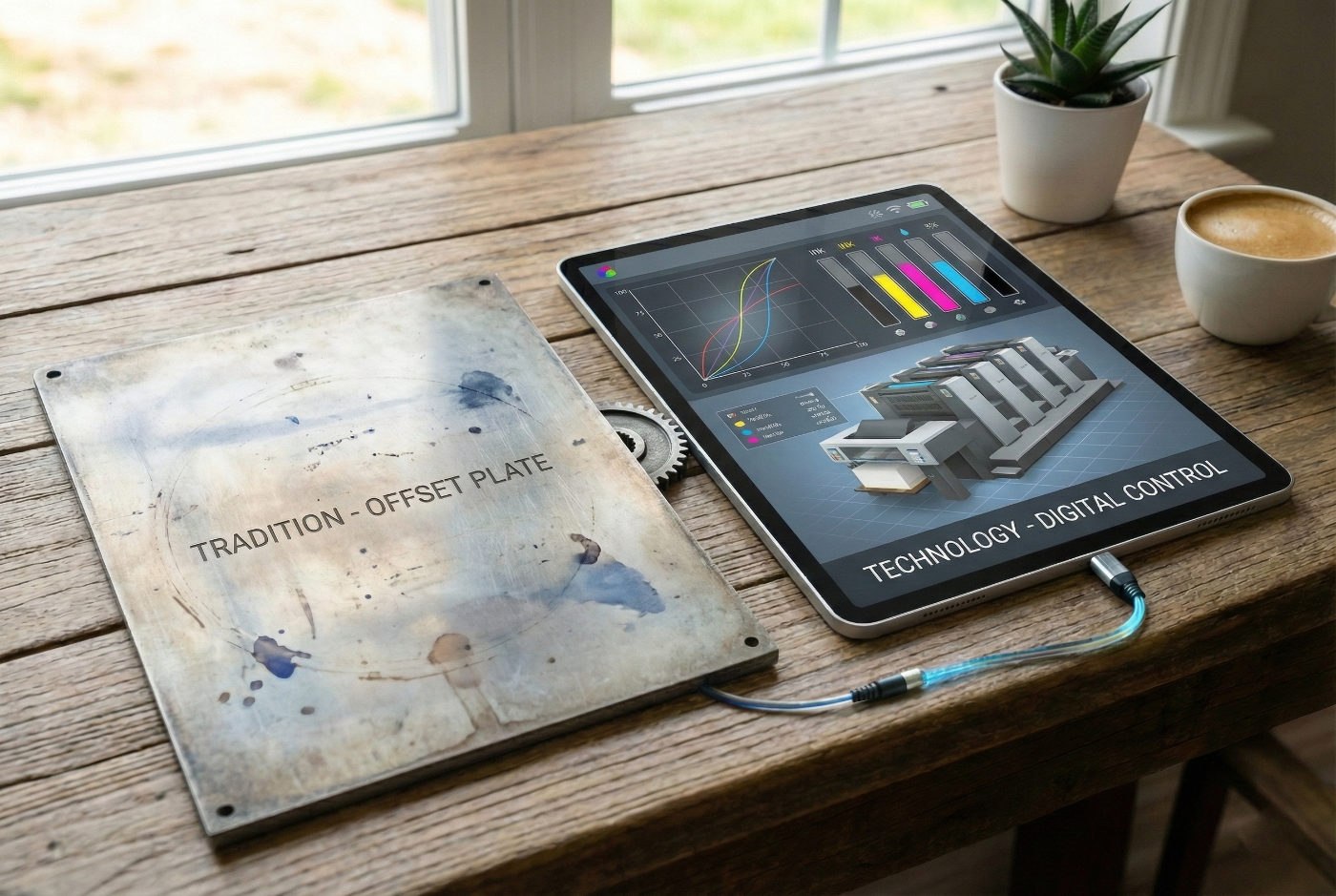
Introduction: The Great Printing Debate
When you begin the journey of publishing an art book, one of the first technical crossroads you will encounter is the choice between Digital and Offset printing. In the past, the choice was simple: digital was for “cheap and fast” projects, while offset was for museum-quality masterpieces.
Today, the line has blurred. Modern digital technology can produce breathtaking results that challenge the naked eye, while offset remains the undisputed king of high-volume production. At ArtBook Printing, we utilize both technologies to ensure every artist finds their perfect match. But which one is right for your project? Let’s break down the mechanics, the costs, and the quality of both methods.
1. How the Technology Works
The Offset Process
Offset printing (lithography) is a traditional technique where the inked image is transferred (or offset) from a metal plate to a rubber blanket, and then onto the printing surface. It uses physical “wet” ink and requires a significant amount of setup time to make ready the press.
The Digital Process
Digital printing doesn’t use plates. Instead, it uses electrostatic rollers or inkjet heads to apply toner or ink directly to the paper. Think of it as a much more sophisticated, industrial-grade version of a high-end office printer, often using liquid electro-inks (like those found in our HP Indigo presses).
2. Quality and Consistency: A Side-by-Side Comparison
Color Accuracy
- Offset: Offers the highest level of color control. It allows for the use of Pantone (PMS) colors, which are pre-mixed inks. If you need a specific neon orange or metallic silver that exists outside the CMYK gamut, offset is your only choice.
- Digital: While modern digital presses are incredible at mimicking CMYK, they struggle with certain high-saturation spot colors. However, for 95% of photography and fine art projects, the difference is virtually indistinguishable to the average reader.
Image Detail
- Offset: Provides the smoothest gradients and the finest screen (the tiny dots that make up a printed image). It is superior for incredibly detailed fine-line work or high-end photography.
- Digital: Older digital machines sometimes produce banding in soft gradients (like a blue sky). However, our high-end digital presses at ArtBook Printing utilize high-definition imaging that eliminates these common digital artifacts.
3. The Economic Factor: Quantity Matters
The break-even point is the most common reason artists choose one method over the other.
- Short Runs (25 – 250 Books): Digital wins. Because there are no plates to create and no hours-long setup process, the cost for a single book is relatively low. This is perfect for limited editions, portfolios, or testing the market.
- Large Runs (300+ Books): Offset wins. While the setup cost is high (often several hundred or even thousands of dollars), the per-page cost is significantly lower. Once the press starts running, it moves at incredible speeds, making high-volume runs much more economical.
4. Paper and Material Flexibility
- Offset: Since it’s a cold process using wet ink, offset can print on almost any substrate—heavily textured stocks, very thin papers, or even plastics.
- Digital: Digital presses use heat to fuse ink to the paper. This means some very thin or highly textured specialty papers can curl or not take the ink perfectly. If you have a specific, exotic paper in mind, offset is usually the safer bet.
5. Turnaround Times
- Digital: If you need your books in a week for a gallery opening, digital is your best friend. The files go straight to the press, and the ink is dry almost instantly.
- Offset: Expect a longer wait. Plate making, drying time (especially for heavy art ink), and the complexity of the setup mean offset projects usually take 8–12 weeks to complete.
Comparison Table: At-a-Glance
| Feature | Digital Printing | Offset Printing |
| Best Quantity | 1 to 250 copies | 300+ copies |
| Setup Cost | Low / None | High |
| Unit Price | Static | Decreases as quantity increases |
| Color Fidelity | Excellent (CMYK) | Superior (CMYK + Pantone) |
| Turnaround | Fast (7-10 days) | Slower (8-12 weeks) |
| Special Finishes | Limited | Unlimited |
6. Which One Should You Choose?
Choose Digital If:
- You are a first-time author testing a niche market.
- You need a small batch of “Portfolio” books for VIP clients.
- You have a tight deadline.
- Your art is standard CMYK and doesn’t require specialty metallic inks.
Choose Offset If:
- You are planning a commercial release with a 300+ print run.
- Your brand requires a specific Pantone spot color.
- You are using very thick or highly textured specialty paper.
- You want the absolute highest retail quality for a coffee table book.
Conclusion: Making the Right Call
Ultimately, the best method is the one that aligns with your goals as an artist and your reality as a business person. At ArtBook Printing, we don’t believe in a one-size-fits-all approach. We consult with every client to weigh their page count, quantity, and aesthetic needs to suggest the most efficient path forward.
Your art deserves to be seen in the best possible light—whether that light comes from a digital laser or a traditional offset plate.