

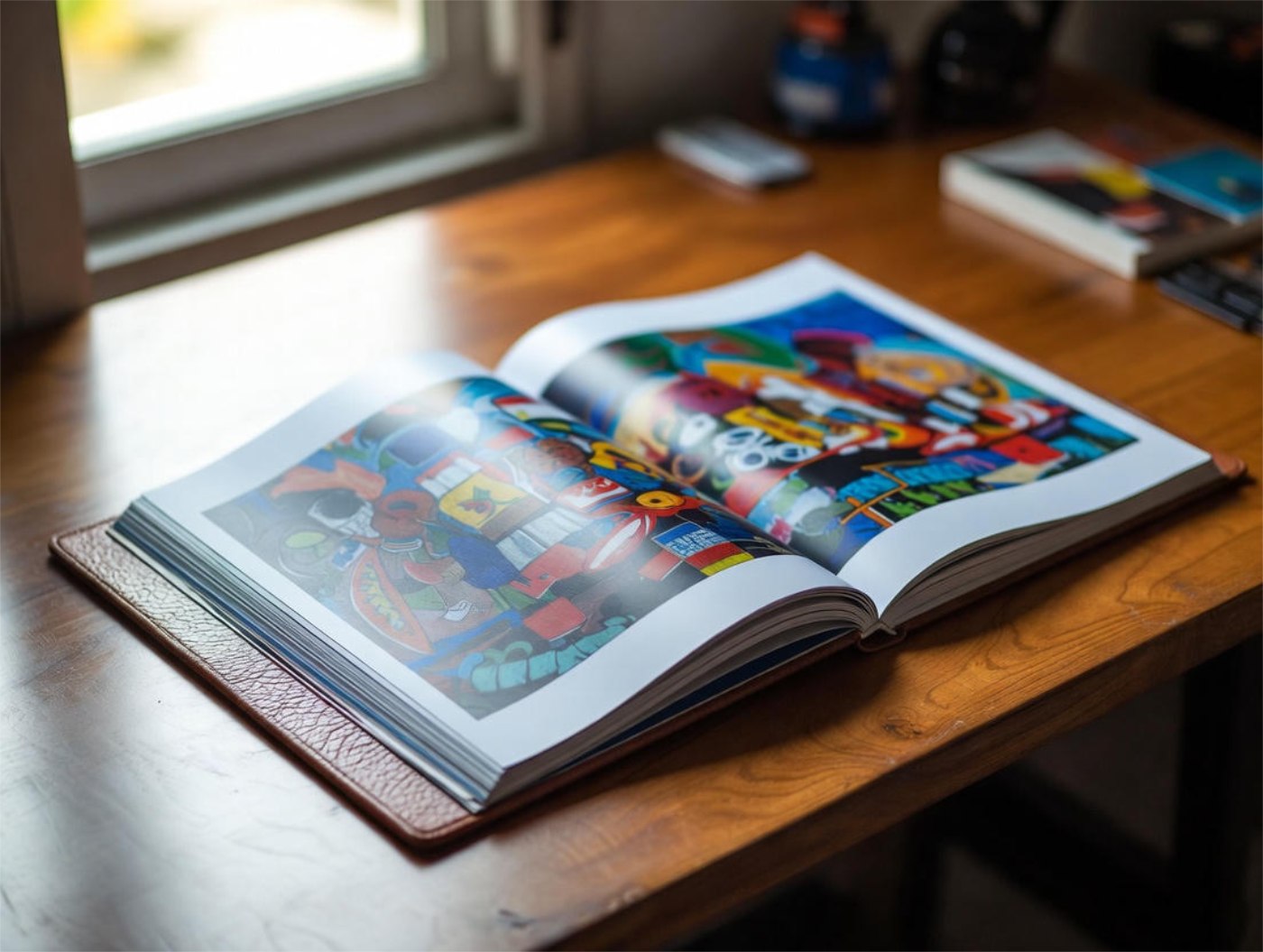
Introduction: The Tangible Power of the Art Book
In a world dominated by fleeting digital scrolls, the physical art book remains the ultimate statement of intent. For a photographer, illustrator, or fine artist, a book is more than a portfolio; it is a curated experience. It allows the viewer to engage with your work at a human pace, feeling the texture of the paper and seeing the depth of the ink.
However, moving from a high-resolution digital file to a finished book is a journey fraught with technical hurdles. Whether you are a “beginner” embarking on your first self-published monograph or a “pro” looking to refine your production value, this guide covers every facet of artbookprinting.com’s gold-standard process.
1. Defining Your Vision: Size, Scale, and Purpose
Before you open Adobe InDesign, you must define the “physicality” of your book.
- Portrait vs. Landscape: Landscape is traditional for photography and sprawling landscapes, but keep in mind that large-scale landscape books can be more expensive to ship and require sturdier binding to prevent sagging.
- Standard vs. Custom Sizes: While artbookprinting.com can handle custom dimensions, using industry-standard sizes (like 8″x10″ or 9″x12″) can often optimize paper yield and reduce waste, lowering your cost per unit.
- The “Coffee Table” Factor: A professional art book usually demands a presence. Thicker covers and larger trim sizes command higher retail prices and offer a more immersive viewing experience.
2. Choosing the Right Printing Technology
Not all printing is created equal. The technology you choose dictates your color accuracy and your budget.
Digital Printing (The Modern Solution)
Digital printing has evolved significantly. Using high-end presses like the HP Indigo, digital printing is ideal for “short runs” (25 to 200 copies).
- Pros: Low entry cost, fast turnaround, and the ability to print “on demand.”
- Cons: Higher cost per unit compared to high-volume offset.
Offset Printing (The Gold Standard)
Offset printing involves physical plates and wet ink. It is the method used for museum-quality books found in prestigious galleries.
- Pros: Unmatched color depth, precise control over “spot colors” (Pantone), and a significantly lower price per book once you cross the 500-copy threshold.
- Cons: High setup costs and longer lead times.
3. The Tactile Experience: Paper Science
In an art book, the paper is a medium in itself. You must choose between coated and uncoated stocks.
Coated Papers (Gloss, Silk, Matte)
Coated papers have a surface sealant that prevents ink from soaking into the fibers.
- Gloss: Offers the highest contrast and most vibrant colors. Excellent for high-fashion photography.
- Silk/Satin: The most popular choice for art books. It provides a soft sheen without the distracting glare of gloss.
- Matte Coated: Offers a non-reflective surface while still keeping colors sharp and “on top” of the paper.
Uncoated Papers (Textured, Offset)
Uncoated papers are porous. The ink “sinks” into the paper, creating a warmer, more muted aesthetic. This is often preferred for illustration books or charcoal sketches where a “natural” feel is desired.
The Pro Tip on Weight: Aim for at least 150gsm to 170gsm for interior pages. Anything thinner will suffer from “show-through,” where the image on the back of the page distracts from the image on the front.
4. Anatomy of the Binding
The binding determines how the book opens and how long it lasts.
- Smyth Sewn (The Best): This involves sewing groups of pages (signatures) together with thread before gluing them into the spine. It allows the book to lay almost flat and ensures pages will never fall out. (Pronounced like “Smith”)
- Perfect Bound: The pages are glued directly to the spine. It is cost-effective and creates a clean, “paperback” look, but it can be stiff.
- Case Bound (Hardcover): The ultimate professional finish. You can choose between a printed “Laminate Wrap” or a “Cloth Wrap” with foil stamping for a classic, high-end library feel.
5. Color Management: RGB to CMYK
The biggest mistake beginners make is sending RGB files to a CMYK press.
- The Conversion: Monitors create color with light (Red, Green, Blue). Printers create color with ink (Cyan, Magenta, Yellow, Black).
- The Gamut Gap: Some bright oranges and deep violets seen on screen cannot be perfectly replicated in CMYK.
- Soft Proofing: Pros use calibrated monitors and “Soft Proofing” in Photoshop to simulate how the ink will look on a specific paper stock. Always ask artbookprinting.com for their preferred ICC profile to ensure your colors stay true.
6. The “Rich Black” Secret
If your art book features black backgrounds or deep shadows, 100% Black ink (K) will look like a dark charcoal gray. To get a “true” black, pros use a Rich Black formula.
- The Formula: C=60, M=40, Y=40, K=100.
- Why it works: The Cyan, Magenta, and Yellow layers sit underneath the Black ink, adding “body” and depth to the color, making it look as deep as a moonless night.
7. Preparing Your Files: The Pre-Flight Checklist
Before hitting “submit,” every pro runs a pre-flight check to avoid costly reprints.
- Resolution: Every image must be 300 DPI at the size it will be printed.
- Bleed: Ensure your images extend 3mm (0.125″) beyond the trim line to avoid white edges.
- The Gutter: Keep important elements (like faces or text) at least 15mm away from the center fold.
- Fonts: Always embed your fonts or convert them to “outlines” so they don’t default to Courier when opened on the printer’s computer.
8. Budgeting and Marketing Your Book
Printing the book is only half the battle. You must account for:
- Shipping Costs: Art books are heavy. Factor in the cost of freight from the printer to you, and from you to your customers.
- The “Artist Proof”: Never skip the proofing stage. It is your last chance to catch a typo or a color shift.
- ISBN and Barcodes: If you plan to sell your book in stores or on Amazon, you will need an ISBN.
Conclusion: Your Legacy in Print
Art book printing is a marriage of technology and soul. Whether you are printing 50 copies for a private gallery showing or 5,000 for international distribution, the quality of your print partner is paramount. At artbookprinting.com, we specialize in bringing the nuance of your work to life, ensuring that your transition from beginner to pro is seamless.
Ready to see your work in a new light? The tactile world of professional print is waiting.